
The Solar Mortgage: How Dollar-Based Home Financing Is Rewriting the ROI Math on Clean Energy
A new generation of solar-inclusive mortgage products is letting homebuyers finance panels at purchase — and the numbers reveal a compounding advantage that traditional energy cost models miss entirely.
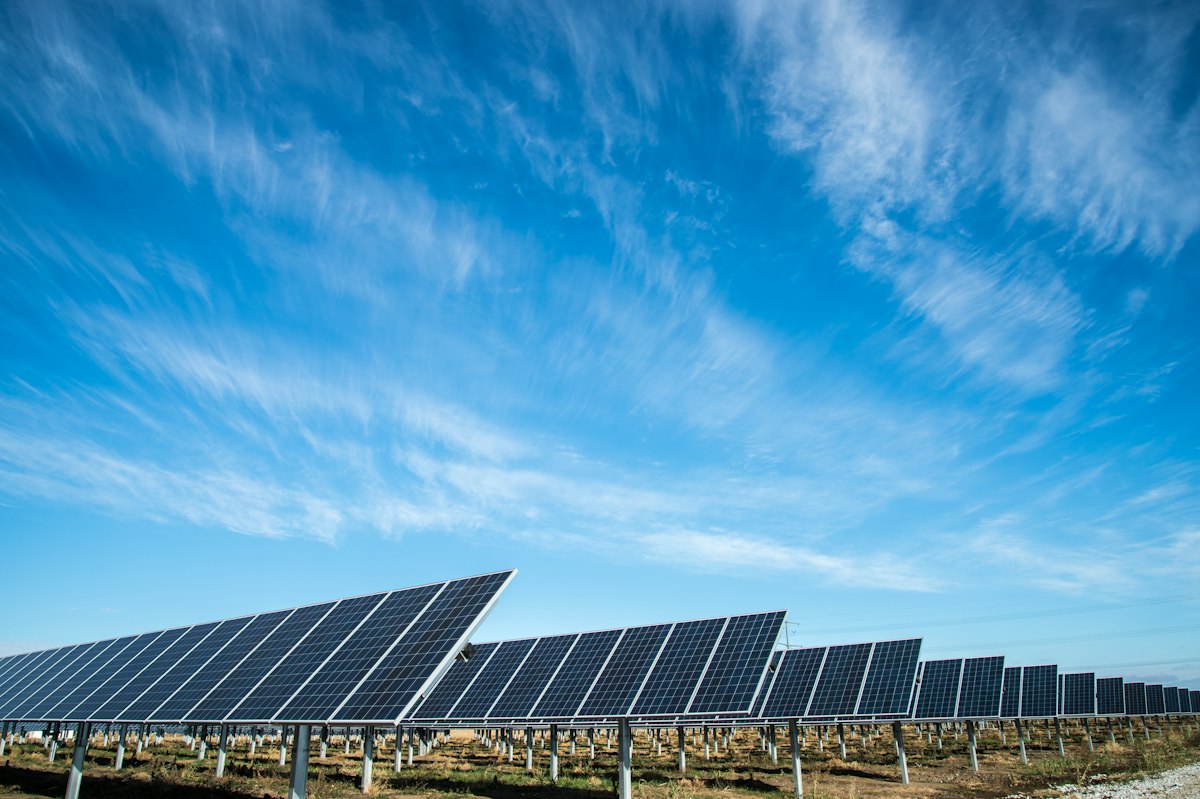
Solar panels integrated into a suburban NJ home. New mortgage products bundle installation costs into the purchase price. (Unsplash)
For decades, solar energy's biggest barrier wasn't technology — it was timing. A homeowner would spend years paying off a mortgage before accumulating the equity or confidence to invest another $20,000 in rooftop panels. The return on investment was real, but the cash outlay felt like a second down payment. That calculus is changing rapidly.
A new class of home financing products — broadly called solar-inclusive mortgages or green mortgages — is collapsing the gap between home purchase and clean energy adoption. Fannie Mae's HomeStyle Energy loan, FHA's Energy Efficient Mortgage (EEM), and several state-level programs allow buyers to roll solar installation costs directly into their purchase mortgage, financing panels at the same low long-term rate as the home itself.
The implications for ROI calculations are significant — and widely underappreciated in consumer-facing energy analysis.
The Compounding Problem With Traditional Solar ROI Math
Standard solar ROI models present payback as a simple division: net installation cost divided by annual savings. A $20,000 net system saving $2,400 per year yields an 8.3-year payback. That's accurate in isolation — but it treats the capital as already-spent cash, which produces a misleading picture when financing is involved.
When solar is bundled into a 30-year mortgage at a 6.5% interest rate, a $20,000 addition increases monthly payments by approximately $95–$110. If that same system eliminates a $200/month electric bill, the household realizes a net positive cash flow of $90–$105 per month from day one — before accounting for any NJ SREC income, federal tax credits, or future utility rate increases.
This is the "dollar-based" framing that housing economists and clean energy advocates are pushing lenders and buyers to adopt: measure solar not by its lump-sum cost, but by its monthly impact on the household budget.
Why Utility Rate Inflation Changes Everything
New Jersey residential electricity rates have risen an average of 3.2% annually over the past decade. A household paying $200/month today will likely pay $274/month in ten years and $375/month in twenty years — if they remain on grid power. A solar system locked in at today's mortgage rate eliminates that escalation entirely.
At 3.2% annual utility inflation, a $200/month bill becomes a $375/month bill in 20 years. A solar-financed home freezes that exposure at zero. The 20-year avoided cost is not $48,000 — it's over $65,000 in nominal dollars.
This inflation hedge is the single most undervalued component of solar ROI modeling. Most residential calculators use flat utility rates — an assumption that benefits the status quo and systematically understates the long-term value of generation ownership.
NJ-Specific Advantages That Stack on Top
New Jersey offers one of the most favorable solar incentive environments in the nation, and each program layered onto a mortgage-financed system adds compounding value:
- Federal Investment Tax Credit (ITC): 30% of the gross system cost is claimable as a federal tax credit in the year of installation. On a $28,000 system, that's $8,400 returned at tax time — which can be applied against principal, reducing the effective mortgage balance and monthly payment.
- NJ SREC-II Program: The state pays Solar Renewable Energy Certificates at $120–$220 per MWh generated. For a typical 8–10 kW NJ home system, this generates $1,100–$2,200 in annual income on top of utility savings.
- NJ Green Bank Financing: For buyers who don't qualify for Fannie Mae or FHA products, the NJ Green Bank offers 2–4% financing specifically for solar and energy efficiency upgrades — dramatically below conventional home equity loan rates.
- Property Tax Exemption: Solar installations in NJ are exempt from property tax assessment increases. A $28,000 system that adds $25,000 to appraised home value generates zero additional property tax.
The EV Add-On: When 1 + 1 = 3
The ROI equation changes again when an electric vehicle is factored into the household picture. A solar system sized to cover both home electricity and EV charging effectively eliminates two major monthly expenses — the utility bill and the gasoline budget — for a single mortgage payment increase.
The average NJ household drives approximately 15,000 miles per year at a gasoline cost of roughly $0.22/mile ($3,300/year). An EV charged from a solar-equipped home reduces that cost to approximately $0.05/mile ($750/year) — a $2,550 annual fuel savings that transforms the combined solar+EV investment from a 7–9 year payback into a 2–4 year payback on the infrastructure portion of the investment.
What the Lender Side Is Getting Right (and Wrong)
Fannie Mae's HomeStyle Energy program — which allows up to 15% of the "as-completed" appraised value to be financed for energy improvements — is gaining traction with NJ lenders. But adoption remains uneven. Many mortgage brokers are not yet fluent in green mortgage products, and buyers frequently leave significant financing efficiency on the table simply because their loan officer defaulted to a conventional product.
The FHA EEM program is even more accessible — it requires no additional appraisal for improvements below $6,000, and improvements above that threshold need only a Home Energy Rating System (HERS) report rather than a full appraisal. For buyers installing systems in the $15,000–$25,000 range, the documentation burden is manageable and the rate advantage over a personal loan or HELOC is substantial.
Before closing on any home purchase in New Jersey, ask your mortgage broker explicitly: "Does this qualify for a HomeStyle Energy or FHA Energy Efficient Mortgage?" If they say no without explanation, get a second opinion. The products exist, the rates are favorable, and many eligible buyers never ask the question.
Calculating Your Personal Advantage
The numbers discussed in this article are general — but your household's actual ROI depends on your specific utility rate, annual consumption, local solar irradiance, and financing terms. The interactive calculator below uses the same methodology outlined in this article to generate a personalized projection based on your inputs.
Enter your annual energy bill and local utility rate (found on your PSE&G or JCP&L bill), toggle NJ incentives on or off based on your location, and choose the Solar Only, EV Only, or Combined model that fits your household situation.
Solar & EV ROI Calculator
Generate your personalized return-on-investment report
Reading Your Results: The Mortgage-Financing Adjustment
The calculator above reports net investment and payback period in the conventional model. To apply the mortgage-financing lens, take your reported Annual Savings figure and compare it against your estimated monthly payment increase.
As a rule of thumb: every $10,000 added to a 30-year mortgage at 6.5% adds approximately $47–$53/month to your payment. A $20,000 solar addition increases your payment by roughly $100/month. If your annual savings exceed $1,200 (which is nearly certain for any NJ system), you are cash-flow positive from month one — without ever writing a separate check for solar.
That is the fundamental shift the solar mortgage represents: it transforms a capital expenditure decision into an operating economics decision, and the operating economics consistently favor solar in New Jersey's incentive environment.
What to Watch in 2026
Several developments are worth tracking for NJ homebuyers and solar investors this year:
- PACE Financing Expansion: Property Assessed Clean Energy (PACE) loans — which attach repayment to the property tax bill rather than the borrower — are expanding in NJ. They offer another zero-upfront-cost pathway, though terms vary significantly by municipality.
- SREC-II Pricing: NJ SREC prices are heavily influenced by how many projects are in the interconnection queue. A surge in utility-scale solar approvals in 2025 could affect 2026–2027 pricing. Lock in long-term SREC contracts where available.
- Grid Modernization Funding: The BPU has allocated $500M+ for distribution grid upgrades under the Clean Energy Act. This directly affects how quickly urban NJ homeowners can interconnect systems and how reliably they can export excess generation.
- Federal ITC Cliff Risk: The 30% ITC is currently scheduled to step down to 26% in 2033 under current law. Projects financed and installed before any legislative changes benefit from the full credit — early movers have a meaningful advantage.
The bottom line: solar energy's ROI was always compelling on a standalone basis. When integrated into home financing and combined with EV ownership, the compounding advantages — immediate cash-flow positivity, utility inflation immunity, NJ incentive stacking, and property tax exemption — make it one of the highest-certainty household investments available in the current market. The question is no longer whether the math works. It's whether buyers know to ask for the right loan.
Disclosure: All financial figures are estimates based on publicly available program data and market rates as of May 2026. This article is for informational purposes only and does not constitute financial, tax, or legal advice. Consult a licensed financial advisor, tax professional, and solar installer before making investment decisions. NJ program availability is subject to change.